If you've ever walked into a pharmacy in France, Germany, Italy, or Spain and wondered why the skincare aisle seems to have products you've never seen at home, there's a reason.
Europe has developed a reputation for skincare ingredients and sunscreen technologies that sometimes reach European consumers well before they become available in the United States.
Part of that difference comes down to regulation. Proprietary patented technologies, regional product launches, and ingredient availability also play a role.
And if you live somewhere as sunny as Newport Beach or Southern California, the difference in sunscreen technology is especially interesting.
Why Are European Sunscreens Different?
One of the biggest differences has historically been the way sunscreen is regulated.
In the United States, the FDA regulates sunscreen as an over-the-counter drug. In the European Union, sunscreens fall under cosmetics regulations, with UV filters evaluated for safety and authorized for use within cosmetic products.
That difference has contributed to European consumers having access to a broader selection of newer UV filters.
For years, American sunscreen innovation moved much more slowly. That is beginning to change: in June 2026, the FDA added bemotrizinol as a permitted sunscreen active ingredient—the first new active ingredient added to the U.S. OTC sunscreen framework in more than two decades. Bemotrizinol has already been used internationally, including in Europe, for years.
So while the gap may slowly begin to narrow, you'll still find European products formulated with combinations of filters and proprietary technologies that aren't necessarily identical to what you'll see on American pharmacy shelves.
Why UVA Protection Matters for Skin Aging
When we talk about sunscreen, most people immediately think about avoiding a sunburn.
But UVB isn't the whole story.
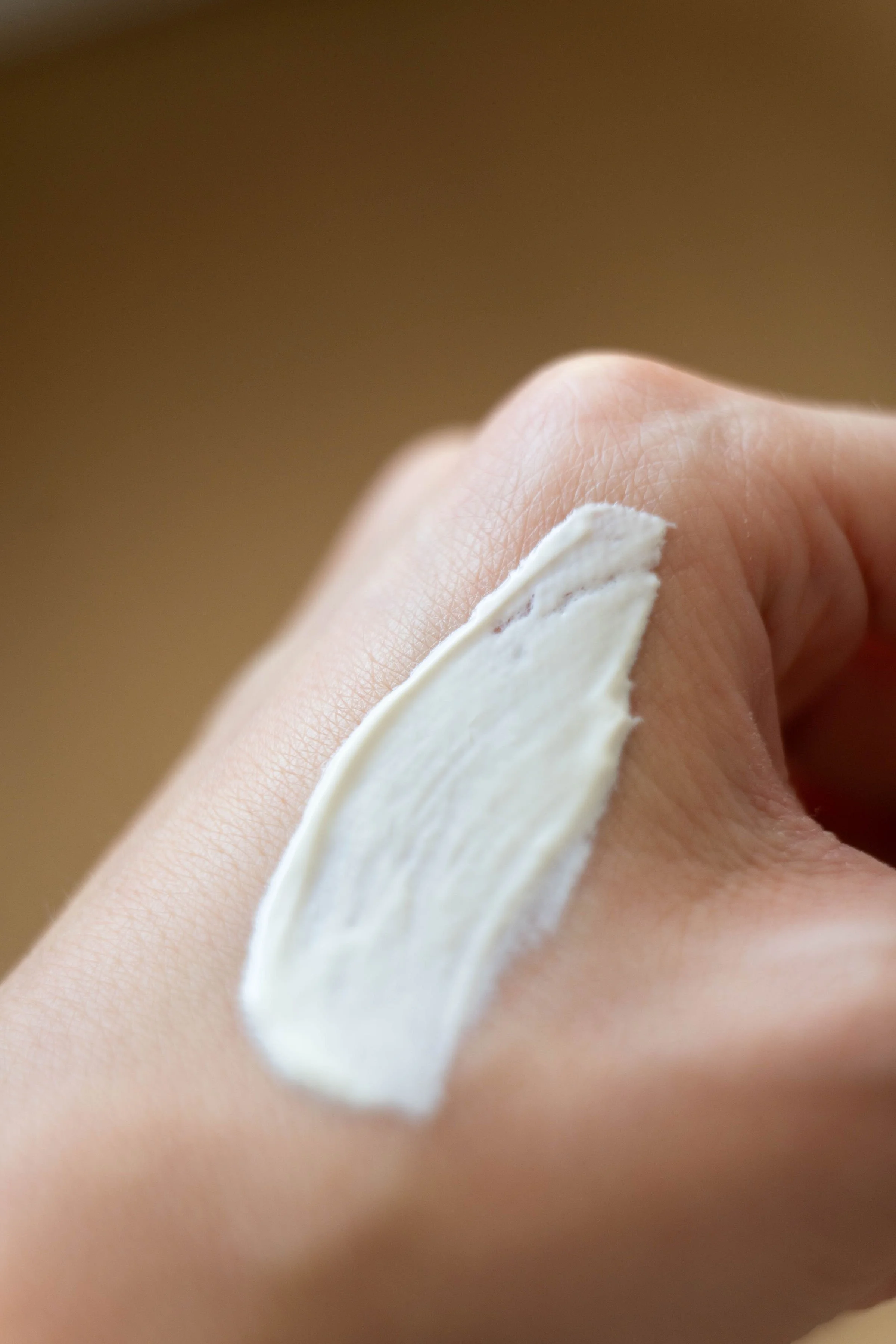
UVA radiation penetrates more deeply into the skin and contributes to photoaging, including changes in collagen, pigmentation, texture, and elasticity.
For those of us in Newport Beach, daily UV exposure isn't exactly limited to summer vacation. Sun protection needs to be a year-round part of a healthy-skin routine.
And when your goal is preventing premature skin aging, broad-spectrum sunscreen is arguably one of the most important products you can use consistently.
European Pharmacy Sunscreens Worth Knowing
If you're headed to Europe, these are a few of the advanced pharmacy sunscreen ranges worth looking for.
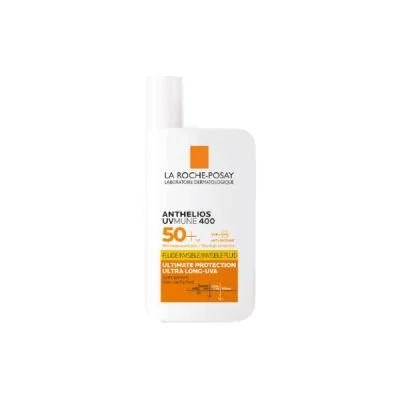
1. La Roche-Posay Anthelios UVMune 400
Best for: Advanced daily UVA protection
La Roche-Posay's Anthelios UVMune 400 range is known for its use of Mexoryl 400, a UV filter developed specifically to extend protection into the ultra-long UVA range.
For someone focused on preventing photoaging and cumulative sun damage, this is exactly the type of innovation that makes European sunscreen interesting.
It can be particularly appealing for:
Daily facial sunscreen
Anti-aging skincare routines
Sensitive skin
High-UV environments
Frequent outdoor exposure
If you spend a lot of time outdoors in Southern California, this is the kind of sunscreen technology worth knowing about.
2. Avène Intense Protect SPF 50+ & TriAsorB Technology
Best for: Sensitive skin and pigmentation concerns
Avène's newer sunscreen technology includes TriAsorB, a filter designed to provide broad photoprotection that extends beyond traditional UVA and UVB protection into a portion of high-energy visible light.
That makes the technology particularly interesting for people concerned about:
Hyperpigmentation
Melasma
Sensitive skin
Photoaging
Daily environmental exposure
For patients already struggling with pigmentation, preventing additional light-triggered pigment production is an important part of the conversation.
3. Daylong Extreme SPF 50+
Best for: Sports and long days outdoors
Originally developed in Switzerland, Daylong has long been a pharmacy favorite for people who need durable sunscreen protection.
Its formulations have used modern filters such as Tinosorb S, Tinosorb M, and Uvinul A Plus, making it especially interesting for:
Hiking
Skiing
Cycling
Beach days
Extended outdoor activity
Active lifestyles
If your European vacation involves more mountain trails than museums, this may be one to look for.
4. Eucerin Sun Hydro Protect & Photoaging Control
Best for: Daily anti-aging skincare
Eucerin combines advanced sun protection with ingredients intended to support the skin itself.
Depending on the specific formula, the brand incorporates ingredients such as Licochalcone A and Glycyrrhetinic Acid alongside its UV protection technology.
This makes the line particularly appealing for:
Mature skin
Daily sunscreen use
Anti-aging routines
People who want skincare benefits alongside sun protection
But European Innovation Isn't Just About Sunscreen
The other reason European pharmacies are fun for skincare lovers?
Some of the newest anti-aging technologies launch there first.
One ingredient worth knowing about right now is Epicelline®.
A Closer Look at Epicelline® in European Skincare
Epicelline® is a trademarked form of dihydromyricetin, an active derived from vine tea and developed by Beiersdorf, the company behind Eucerin.
What makes this technology particularly interesting is the way it approaches skin aging. Many familiar anti-aging ingredients and treatments focus heavily on supporting collagen production, improving hydration, or encouraging skin renewal. Epicelline® is part of a newer area of skincare research focused on another question: How does the behavior of our skin cells change as we age?
According to Eucerin, Epicelline® targets age-related epigenetic changes, particularly DNA hypermethylation, with the goal of influencing gene activity associated with younger skin function.
This is a different approach from ingredients designed primarily to exfoliate the skin or temporarily improve the appearance of fine lines. It also reflects a broader area of interest within longevity skincare: looking beyond the visible signs of aging to better understand the cellular processes involved in how skin changes over time.
What Does "Epigenetic Skincare" Mean?
Your DNA itself doesn't necessarily change as you age, but the way cells express certain genes can change over time.
Epigenetics is the study of mechanisms that influence whether particular genes become more or less active. One of those mechanisms is DNA methylation.
Eucerin describes Epicelline® as an ingredient developed to target age-related hypermethylation and support the reactivation of youth-associated gene activity in skin cells.
This is an emerging area of skincare science, and it's important to keep the research in perspective. New cosmetic technologies can offer promising approaches to supporting aging skin, but that isn't the same as reversing biological aging. Continued research will help us better understand what these ingredients can realistically accomplish over time.
Where Can You Find Epicelline®?
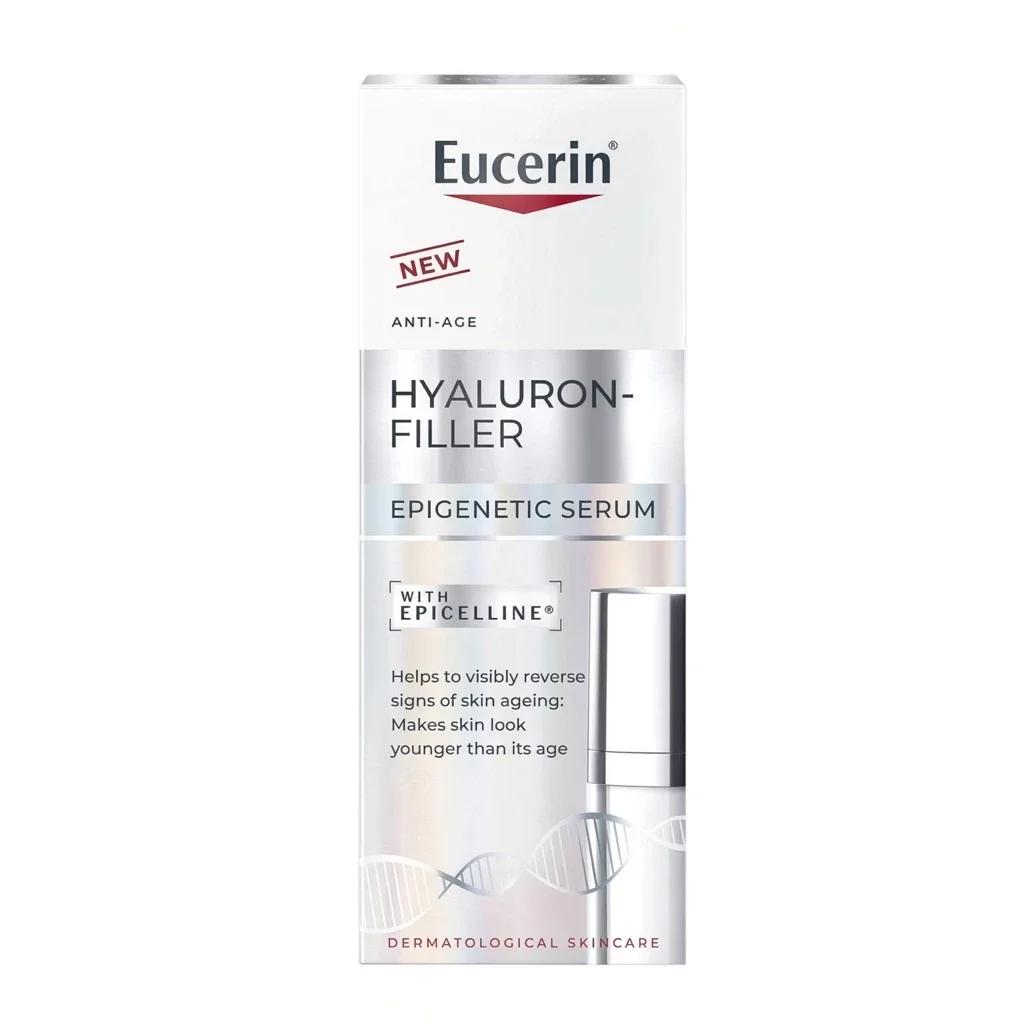
Epicelline® is currently incorporated into select Eucerin Hyaluron-Filler + Longevity skincare products, including the brand's Epigenetic Serum.
Technologies like Epicelline® can be viewed as an additional layer within a broader healthy-aging skincare strategy rather than a replacement for foundational skin care and sun protection.
Because the basics still matter. A lot.
The Skin Longevity Routine I Would Build Around These Technologies
If you're trying to create a smarter anti-aging routine, you don't necessarily need ten products.
Think about three jobs:
1. Protect the Skin From Future Damage
Sunscreen comes first.
Consistent broad-spectrum sun protection helps reduce cumulative UV damage associated with premature skin aging, pigmentation, and skin cancer risk. The FDA continues to recommend sunscreen alongside other sun-protective measures.
For someone living in Newport Beach, I consider this non-negotiable.
2. Support the Skin's Structural Framework
This is where ingredients like peptides become interesting.
Peptide-containing skincare products are generally designed to support the appearance of firmness, smoothness, and healthy skin renewal.
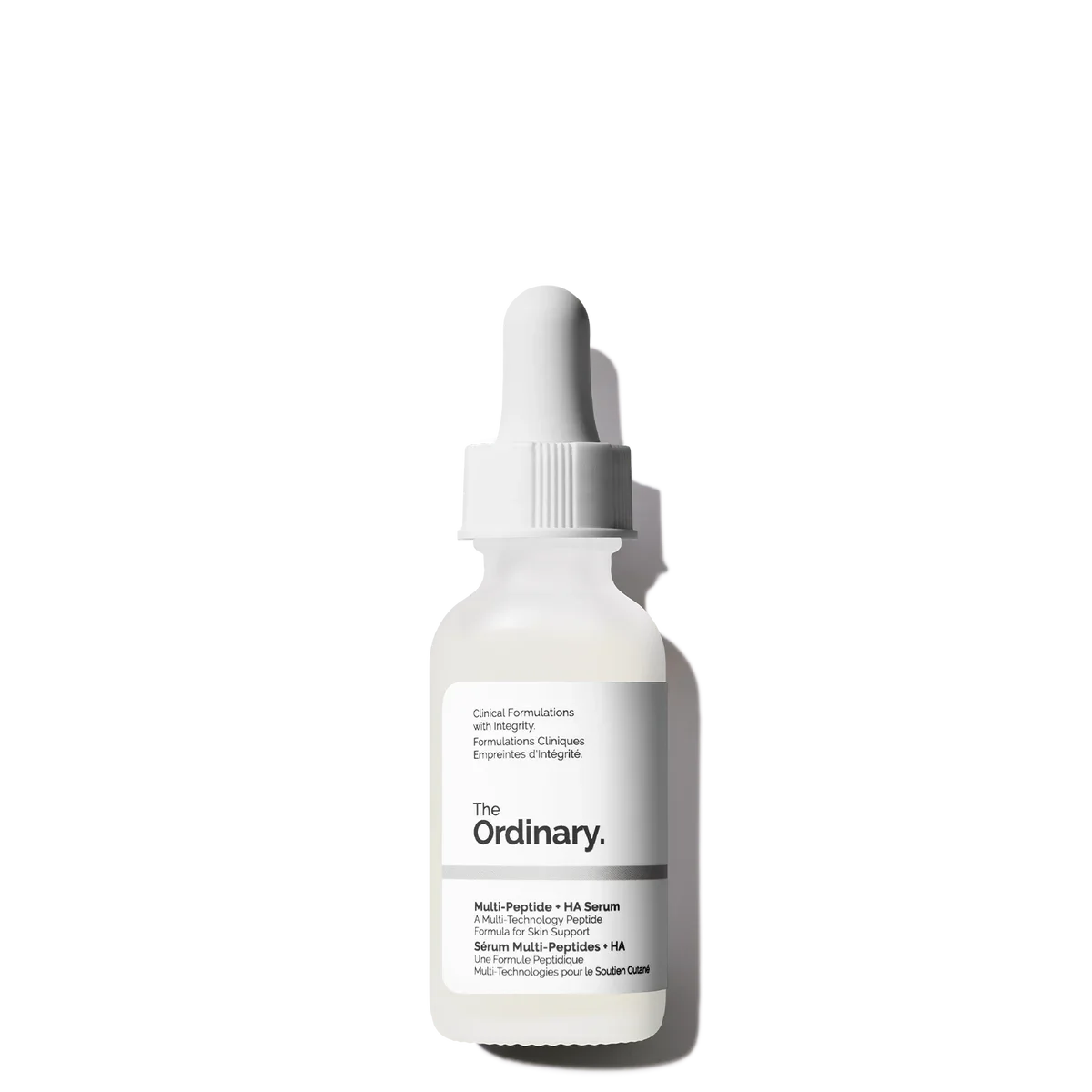
One popular example is The Ordinary Multi-Peptide + HA Serum, which incorporates multiple peptide technologies into one formula.
Think of peptides as part of the support side of your routine rather than your primary line of defense against aging.
3. Explore Newer Cellular-Aging Technologies Thoughtfully
This is where a product containing a newer ingredient like Epicelline® may fit.
The idea isn't that one serum suddenly replaces retinoids, sunscreen, peptides, or everything else we know about healthy skin.
Instead, it adds another potential tool to a growing category of longevity-focused skincare.
Three Categories, Three Different Jobs
If I were simplifying this entire conversation, I'd think about it this way:
Advanced sunscreen: Helps prevent future UV damage.
Peptides: Help support the skin's structural appearance and renewal.
Newer epigenetic skincare technologies: Are exploring ways to influence age-related cellular behavior.
They don't necessarily compete with one another. They can complement one another.
A European Skincare Souvenir Worth Bringing Home
So, what should you actually buy on your next European vacation?
Forget the keychain.
A really good pharmacy sunscreen may be the better souvenir.
Products like La Roche-Posay Anthelios UVMune 400, Avène's advanced sunscreen ranges, Daylong Extreme, and select Eucerin formulas showcase skincare technologies and formulations that may differ from the versions available in the United States.
And depending on where you're traveling, you may also encounter formulations, sizes, or product lines that simply haven't made their way onto U.S. shelves yet.
Just remember: products purchased abroad may be formulated and labeled according to different regulatory requirements, so it's worth reading the ingredient list and choosing products that make sense for your individual skin.
What I Would Prioritize
If you're standing in a European pharmacy staring at an entire wall of skincare, here's the simple version:
For prevention: Look at advanced broad-spectrum European sunscreens, including La Roche-Posay Anthelios UVMune 400.
For skin longevity innovation: Keep an eye on Eucerin's Epicelline® technology and Hyaluron-Filler + Longevity products.
For structural skin support: A well-formulated peptide serum can complement your routine.
But don't let innovative ingredients distract you from the most effective habit of all:
Wear your sunscreen every day. Especially if you're coming home to Newport Beach.
Healthy Skin Is About More Than the Latest Product
I love discovering innovative skincare, but healthy aging isn't about chasing every new ingredient that hits the market.
Your skin reflects a combination of sun exposure, genetics, hormones, inflammation, skin barrier health, lifestyle, and the products you use consistently.
At MG Allergy, we're particularly interested in that bigger picture.
If your skin is changing, becoming more reactive, developing persistent pigmentation, or simply behaving differently than it used to, it may be worth looking beyond the skincare aisle.